.

Frequently Asked Questions
..
.
.

 
An Important Message About “Teacup” Yorkies
.
An Important Note About Color in Yorkshire Terriers
.
Parti-Color Yorkshire Terriers? 
.
What Is A RESPONSIBLE BREEDER 


An Important Message About “Teacup” Yorkies

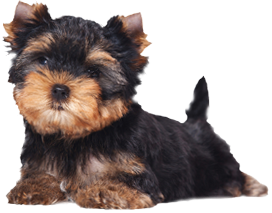
If you are interested in purchasing a tiny Yorkie, sometimes called a Teacup, 
Micro Mini, Teenie, or any other name that means “extra small”, there are 
several things you should consider.  The YTCA’s Code of Ethics precludes the 
use of the words “teacup”, “tiny specialists”, doll faced, or similar terminology 
by its members, and for good reason.
.
All breeders may occasionally have an unusually small Yorkie (hopefully healthy),
though no responsible breeder breeds for this trait.  Many breeders prefer a 
general weight range of 4-7 four pounds believing that size retains desired Toy 
qualities while maintaining optimum health.  The Yorkie Standard states weight
"must not exceed seven pounds" and as a prospective pet owner you should 
realize that even at 7 pounds, the Yorkie is still a small dog.  (Females weighing 
less than 5 pounds are considered by most breeders to be unsuitable for breeding.)
.
Special circumstances often come with extra tiny dogs.  They are extremely 
susceptible to both hereditary and non-hereditary health problems, including 
birth defects that may go undetected for a long time.  Other common 
problems may include, but are not limited to, diarrhea, vomiting, along with 
extra and expensive tests prior to routine teeth cleanings and surgeries. 
Small ones are more likely to have poor reactions to anesthesia and die from 
it.  Tiny dogs are more easily injured by falls, being stepped on and being 
attacked by other dogs.  These health problems nearly always result in
large veterinary bills.
.
Please take this into consideration and make purchasing a healthy pet your top 
priority, not size.  The “novelty” is certainly not worth the pain, heartbreak, or 
extra expense. Remember, all Yorkies are comparatively small.  The most
important thing is finding a healthy puppy that will grow into a healthy adult, 
especially since you looking at an 11 to 15 year commitment with your Yorkie.
.
There is much information on our website.  Please take the time to study it 
before buying a puppy.  We wish you the best of luck.
Back to Top
.

.
An Important Note About Color in Yorkshire Terriers
.
The most distinctive characteristic of an adult Yorkshire Terrier is its long blue 
and tan silk coat.  A puppy is born black and tan, but the only recognized colors for 
adults when registering with AKC are blue and gold, blue and tan, black and gold, 
or black and tan.
 .
      The AKC Breed Standard and YTCA Code of Ethics do not recognize any 
other color dogs than noted above.  This includes all gold, born blue, liver 
(also known as red or chocolate), and parti-colors.  One of the reasons for 
avoiding breeding  "off-colored" Yorkies is because it could be a genetic defect 
that may affect the dog's health.  Some health problems can include, but aren't
limited to, severe skin problems, allergies, total hair loss and in some cases 
long-term illness and/or death. 
 .
      A responsible breeder will not intentionally breed for undesirable traits. 
On very rare occasions, a breeder will have a puppy born with a color anomaly. 
That puppy should undergo careful health screenings before being placed in a 
spay/neuter (non-breeding) home.  A breeder should certainly never 
promote these deviations as being desirable or rare.
 .
      There are many issues that potential Yorkie owners need to study before
purchasing their dog.  We hope you will read the helpful information at this 
website and make an informed decision.  It could very possibly save you
aggravation, disappointment and expense.  We wish you the best of luck
in your pursuit of a happy, healthyYorkshire Terrier.
Back to Top
.
.
 Parti-Color Yorkshire Terriers? 

Do not be fooled into buying one of these dogs. 
Now that Designer Dogs are the rage, the “new” Parti-Color Yorkie is certain to draw attention. While we have had problems in the past with “rare gold” Yorkshire Terriers being advertised, the parti-color is a new one! While some breeds have an occasional mismark and some breeds do have a gene for a white dog, we do not. Had there been a problem with white markings, piebald dogs, or white dogs, it would have been addressed in our Standard. Due to unscrupulous breeders advertising parti-colored Yorkshire Terriers at premium prices, our members voted unanimously at our annual meeting to add a disqualification for these and other off colored dogs.

The Yorkshire Terrier is a tan dog with a blue saddle. The “rare gold” Yorkie is actually a dog that appears as such due to an improper saddle pattern. Show breeders have seen this and commonly call it running gold. When the dog is cut down, you can see that the blue saddle does not come down far enough. The Yorkshire Terrier blue saddle extends lower than some of the other black and tan terriers extending to the elbow and also to the hock on the rear leg. Gold hairs can occur in the blue and black or blue hairs can appear in the gold. These faults are addressed in the Yorkshire Terrier Standard. These dogs have serious faults and they too should not be sold as "rare" but placed in loving homes as they are very incorrect. Yorkies do not have white markings…never have. A small white strip is sometimes seen on the chest of newborns but this always turns to tan within a few weeks. The AKC registration form for Yorkshire Terriers allows for four choices: blue and tan, blue and gold, black and tan, black and gold. There is no provision for markings.

A brief history of the development of the Yorkshire Terrier will show that the dog was developed in the 1800’s. In England, the Waterside Terrier was often crossed with the old English terrier, a silky coated black and tan or blue and tan terrier weighing around five pounds. When crafters from Scotland came into England, they brought several “Scotch“terriers, among them the Paisley and the Clydesdale. The Paisley was a small silky coated dog in various shades of blue. The Clydesdale was a blue and tan dog with the exact color pattern as the Yorkie of today. All of these original breeds were grizzle, tan, blue, blue and tan, or black and tan. No white dog or dogs with white markings were involved in the process of developing the breed. The first Yorkshire Terriers were entered at shows as Broken Haired Scotch and Yorkshire Terriers. In the early days, dog classes were often divided by size, under five pounds and over five pounds; however, there was never a class for colors other than the blue and tan we see today. The color pattern and coat texture has bred true and has been dominate enough that the Silky Terrier evolved by crossing the Yorkshire Terrier and the Australian Terrier with basically the same coat of the of the Yorkie.
 

Back to Top
.

.
What Is A RESPONSIBLE BREEDER 
By Shirley Patterson Secretary of the YTCA 

A puppy mill is a mass dog breeding establishment that produces puppies for profit by selling them wholesale to the pet industry. Many puppy mills are characterized by overcrowding, filth, inadequate shelter, and insufficient food, water, and veterinary care. Most puppy mill owners sell their dogs wholesale to brokers, who in turn, sell them primarily to pet stores. Because profit, not quality dogs, is the ultimate goal of the puppy mill owner, breeding practices are often shoddy, and the breeding dogs are kept under the most inexpensive possible conditions that will keep them alive and producing. 

In contrast, there are hundreds of responsible and reputable kennels and breeding establishments throughout the country whose owners make a profit, but not at the expense of their dogs. Whether these breeders are full-time professionals making an entire living from a kennel, or hobby breeders with 5 or 10 animals, the responsible breeder is as concerned with improving the quality of the breed, by showing or belonging to a breed club, than he or she is at making money. Customers wishing to buy puppies from these breeders are welcome to inspect the premises and in most cases, to meet the puppies parents. 

In between the puppy mill operators and the responsible kennel owners are the so-called " backyard breeders" whose newspaper ads dot Sunday papers each week. These are people who own one or two purebred dogs and produce a litter of puppies once a year or so for extra money or " because I want my dog to have the experience of being a mother before I get her spayed or Aunt Tillie would like to have a puppy just like my mine." Like puppy mill puppies these animals are often haphazardly bred with no regard to the consequences and their offspring will most often suffer the same consequences. 

As secretary for the YTCA I answer an enormous amount of calls each day. I spend at least half the day conversing with many first time pet buyers who seek to have guidance in finding a healthy pet and also the best breed for their individual life style. I also talk to many individuals who have already purchased a pet and are now experiencing problems be it minor ( Why are my Yorkies ears not standing up?) to more serious health problems and what to do about them since now there is no one interested or concerned enough about the puppy to answer these questions. 

A Responsible breeder will give each puppy the socialization that it needs and this requires a great deal of devotion and patience . They are responsible for each puppy that they have bred. (The puppies new owner will reap these benefits.) Their dogs are their number one concern as they are completely dependent on them for their care, training and medical attention. Their dogs are "special " to them . 

My own personal feeling is "If you are making money in dogs, you are either overbreeding or your dogs are not receiving the proper medical attention that they so deserve.
 

.
Visitors since 10/9/03     
<img src="/cgi-bin/Count.cgi?ft=5|dd=C|frgb=255;255;255;&df=login_faq.dat">
.
Back to Main Page
.
.